

Residential Flat Roofing
Types, Benefits & What To Know
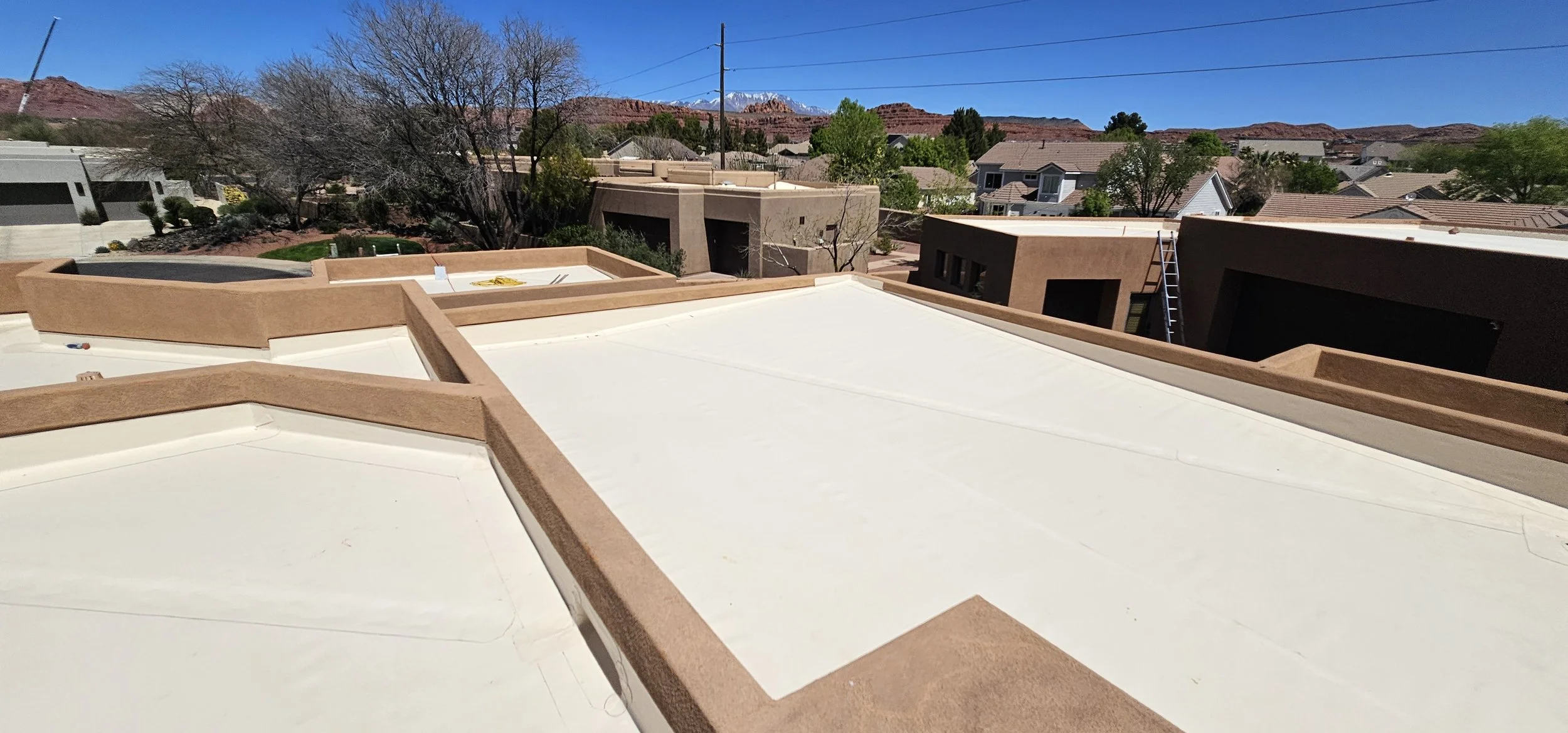
What Is Flat Roofing?
Flat roofing refers to roofs with minimal slope (typically 0-2 degrees). While truly flat roofs are rare, "flat" roofs are common on modern homes, additions, and commercial buildings. Because flat roofs don't shed water as efficiently as pitched roofs, the membrane system itself provides the waterproofing barrier. This requires different materials and maintenance approaches than sloped roofs.
-
Flat roof installation begins with assessment of slope and drainage. A sloped substrate (tapered insulation or decking) prevents water pooling. Underlayment and insulation are installed for energy efficiency. The membrane is then rolled out and sealed according to the system type. Flashing around penetrations (vents, skylights, edges) is carefully detailed. Proper drainage through gutters or sumps is essential. The key to flat roof performance is correct slope and excellent flashing detail—improper installation leads to ponding and leaks.
-
Flat roofs require more frequent maintenance than pitched roofs. Inspect twice per year (spring and fall) for debris, membrane damage, and flashing deterioration. Clear leaves, branches, and dirt regularly—debris holds moisture against the membrane. Check for water pooling or ponding; this indicates drainage problems that must be addressed. Look for cracks, splits, or blistering in the membrane. Remove algae or moss growth. Address repairs promptly before small issues become costly leaks. Regular maintenance extends flat roof life significantly.
-
Flat roof installation typically costs $5,000-$15,000 depending on roof size and material selected. Lifespan varies: TPO and EPDM last 20-40 years, while modified bitumen lasts 15-20 years. Maintenance costs are higher than pitched roofs due to required inspections and repairs. Over time, budget for re-coating or membrane replacement every 20-30 years. Proper installation and maintenance significantly affect longevity and repair costs.
Benefits of Flat Roofing
Flat roofs maximize usable space—you can create a rooftop deck, garden, or patio that pitched roofs don't allow. They're ideal for modern architectural designs and minimalist aesthetics. Installation can be faster and cheaper than pitched roofs in some cases. Flat roofs also make HVAC and solar panel installation easier since equipment sits flat on the roof surface. For additions and second stories, flat roofs simplify construction.
-
Maximizes usable rooftop space
Allows rooftop decks or gardens
Modern aesthetic appeal
Easier equipment installation (HVAC, solar, etc.)
Can be faster to install than pitched roofs
Great for architectural flexibility
-
Water pooling and ponding if not properly sloped
Shorter lifespan than pitched roofs (varies by material)
Requires more frequent maintenance and inspection
Higher repair costs if membrane fails
More susceptible to leaks if installed incorrectly
Less aesthetic appeal to traditional homeowners
Flat Roof Types & Materials
Residential flat roofs use three primary membrane systems. Understanding the differences helps you make informed decisions about new installation or replacement.
TPO (Thermoplastic Polyolefin)
TPO is a single-ply membrane made of plastic and rubber compounds. It's white or light-colored, which reflects sunlight and keeps buildings cooler. TPO is affordable, UV-resistant, and durable (20-30 year lifespan). It's easy to repair and install, making it popular for residential applications. The seams are heat-welded for a strong bond. TPO is energy-efficient and becoming increasingly popular as a standard choice for flat roofs.
EPDM (Ethylene Propylene Diene Monomer)
EPDM is a synthetic rubber membrane, typically black. It's extremely durable and flexible, resisting cracking in temperature extremes. EPDM is affordable and has a long lifespan (25-40 years). Seams are sealed with adhesive or tape. The black color absorbs heat, which can increase cooling costs in warm climates. EPDM is well-established and trusted by roofers nationwide.
Modified Bitumen
Modified bitumen is asphalt-based, combining asphalt with rubber or plastic polymers. Sheets are rolled out and sealed with heat or adhesive. Modified bitumen is affordable and durable (15-20 years), though shorter-lived than TPO or EPDM. It's familiar to older roofers and works well in cold climates. The dark color absorbs heat, similar to EPDM. Modified bitumen is a traditional choice being gradually replaced by TPO in new installations.